Editorial illustration generated or digitally adapted with AI; not a photograph of a real patient or product.
A realistic after-work reset that helps you close the workday, reduce friction and make room for the rest of your evening.
HHealthy Living Guide Editorial Team·5 min read· Editorial update: November 7, 2026
AI-generated editorial lifestyle image.Editorial illustration generated with AI; not a documentary photograph.
Key Takeaways
Give unfinished work a clear place to wait until tomorrow.
Use one environmental cue to mark the transition out of work mode.
Choose a low-pressure activity that fits the time and energy you have.
A short version is better than abandoning the routine on busy evenings.
Why the transition matters
Work does not always end when you close a laptop. Messages, unfinished tasks and the mental habit of staying “on” can follow you into the evening. A short transition ritual can help create a clearer boundary between work time and personal time.
This is not about being perfectly calm. It is about making the next part of your day feel more intentional.
1. Close the workday in five minutes
Before you leave your desk, write down the next action for any task you are carrying forward. Note the one thing that matters most tomorrow. Then close the tabs, put away the work device or change location if you can.
The aim is not to finish everything. It is to give unfinished work a place to wait.
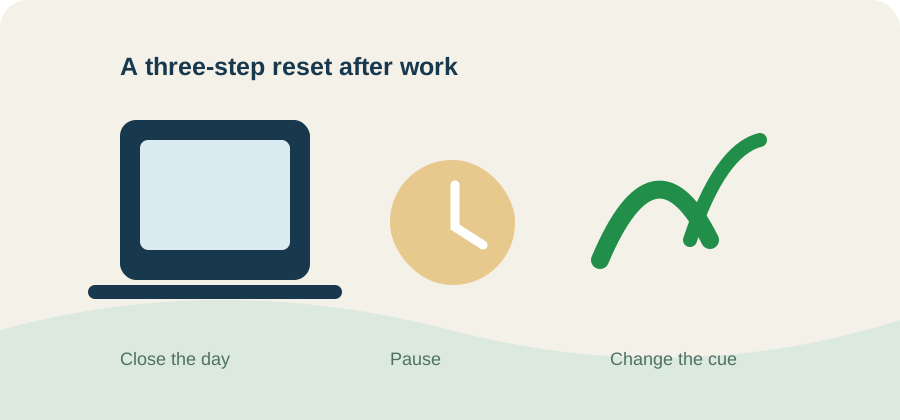
A three-step after-work reset: close the day, pause and change the environment.
2. Change one environmental cue
Move from the work setting into a different activity or space. That might mean changing clothes, stepping outside for a few minutes, making a cup of tea or tidying one small surface. A change of context can make the transition feel more concrete.
Choose something that works with your schedule and access. A long walk is not a requirement.
3. Choose a low-pressure activity
Try a short activity you genuinely enjoy: reading, cooking, music, a relaxed conversation, stretching or a simple hobby. If you want the evening to be calmer before bed, avoid filling every minute with demanding tasks.
NHS and NIH sleep resources recommend making room for relaxing activities before bedtime. You can borrow that idea earlier in the evening too, without treating it as a medical intervention.
Make it flexible enough to survive real life
Some evenings will be busy. Build a short version of your reset for those days: close the workday, change one cue and take five quiet minutes. On a more spacious evening, take longer.
The 3-part reset
Close the loops you can. Change your environment. Choose one activity that belongs to you.
If work stress keeps spilling into your personal time
A routine cannot solve an unreasonable workload, unsafe working conditions or persistent anxiety on its own. Consider what boundaries or support may be needed, including a conversation with a manager, trusted person or qualified professional.
Start with one change that is within your control, and do not mistake a difficult week for a personal failure.
Sources & further reading
The practical suggestions in this guide are informed by the public resources below. They are not a substitute for individual medical advice.
This article is general educational information, not medical advice. Persistent sleep difficulties, severe daytime sleepiness, breathing pauses during sleep or other concerning symptoms deserve discussion with a qualified healthcare professional.
Create a boundary without a perfect shutdown
Choose a practical marker for the end of work: closing the laptop, silencing notifications or changing clothes. If you are on call, identify which alerts truly require a response and how you can handle them without repeatedly scanning your phone. A boundary does not need to be absolute to be useful. The objective is to reduce needless interruptions during time intended for rest.
Unload unfinished tasks on paper
A short list can separate genuine next steps from vague worries. Write down what is unfinished, one concrete action for tomorrow and any deadline that really matters. Avoid turning this into another hour of planning. If a task is not urgent, leave it for the next working session. The physical act of putting the list aside can make it easier to stop mentally rehearsing each obligation.
Choose a low-pressure activity
Some people enjoy walking, others prefer a shower, a simple hobby or sitting quietly. Pick an activity that does not invite comparison or performance tracking. Gentle movement can be refreshing, but vigorous late exercise is not ideal for everyone. If you feel wired after work, start with five minutes and notice whether the activity leaves you calmer or more activated. There is no single wind-down method that works for all adults.
Know when more support is needed
If work stress is persistent, affects relationships, or causes repeated sleep problems, changing an evening routine alone may not be enough. Consider speaking with your manager about workload, with supportive people around you, or with a qualified healthcare professional. A relaxation programme can be an optional learning aid, not a treatment for burnout, anxiety disorders or insomnia.
Institutional reading
For further context, consult this public-health resource. It does not evaluate or endorse any product linked elsewhere on this page.