


Key Takeaways
- Start with one repeatable anchor, such as a fairly consistent wake-up time.
- Keep the wind-down simple: choose two or three calming, low-effort activities.
- Make the bedroom support rest, but avoid expensive changes before trying the basics.
- Treat the routine as flexible; seek professional advice if sleep problems persist or affect daily life.
Why a routine can be useful
A bedtime routine is not a magic switch, and it does not need to be complicated. Think of it as a short transition between the pace of your day and the quieter environment you want before sleep.
Public health guidance commonly recommends keeping sleep and wake times reasonably consistent, making space to relax before bed and creating a bedroom that feels dark, quiet and comfortable. These are useful starting points—not a promise that every night will be perfect.
Start with one anchor, not ten rules
Choose one habit that feels realistic enough to repeat. For many people, the easiest anchor is a fairly consistent wake-up time. Once that feels stable, work backwards to protect enough time for sleep.
The NIH notes that sleep needs vary, while its guidance lists seven or more hours as a general recommendation for adults aged 18–60. Your own needs and circumstances may differ.
Pick a wake-up time you can maintain most days. Then give yourself a calm buffer before the bedtime you are aiming for.
Build a 30-minute wind-down you can repeat
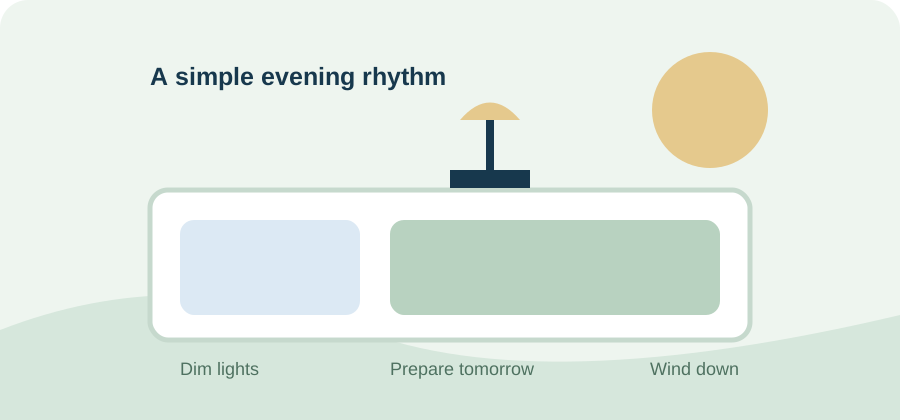
You do not need to fill every minute. Try choosing two or three low-effort activities that help mark the end of the day:
- Put tomorrow's essentials in one place so they are not taking up mental space.
- Lower the brightness and stimulation around you.
- Read a few pages, listen to something calm, take a comfortable shower or do a gentle breathing exercise.
- Keep the routine flexible. If one step becomes a chore, replace it.
The NHS suggests making time to relax before bed and experimenting with habits that help you wind down. The best routine is one you can actually live with.
Make the room support the routine
Keep the bedroom as dark, quiet and comfortable as you reasonably can. Consider simple changes: closing curtains, silencing notifications, moving a bright clock out of view or reducing clutter around the bed.
There is no need to buy a full set of sleep products before trying the basics. Adjust what you already have and notice which changes make your room feel more restful.
Avoid turning the routine into a performance
A routine should reduce friction, not create pressure. Avoid treating a missed step as failure. Travel, caring responsibilities, shift work, stress and ordinary life can all interrupt consistency.
Also be thoughtful about caffeine, nicotine and alcohol near bedtime. NIH sleep guidance notes that caffeine can affect sleep for hours, so the timing that works for one person may not work for another.
When to seek more support
Occasional difficult nights are part of life. If sleep problems continue, affect your day or leave you persistently exhausted, speak with a qualified healthcare professional. A routine may support healthy habits, but it is not a treatment for an underlying sleep disorder.
Your next step: choose one small change for the next seven days. Keep it simple enough that you can repeat it on an ordinary Tuesday.
Sources & further reading
The practical suggestions in this guide are informed by the public resources below. They are not a substitute for individual medical advice.
Institutional reading
For further context, consult this public-health resource. It does not evaluate or endorse any product linked elsewhere on this page.
Read the institutional guidance