Editorial illustration generated or digitally adapted with AI; not a photograph of a real patient or product.
Simple, affordable adjustments to light, noise, comfort and everyday distractions that can make a bedroom feel more restful.
HHealthy Living Guide Editorial Team·5 min read· Editorial update: November 7, 2026
AI-generated editorial lifestyle image.Editorial illustration generated with AI; not a documentary photograph.
Key Takeaways
Focus first on the basics: light, noise and personal comfort.
Try one adjustment at a time so you can tell what helps.
Use practical, affordable changes before buying new equipment.
Seek professional advice if sleep remains difficult or you notice concerning symptoms.
Start with the basics: dark, quiet and comfortable
There is no single perfect bedroom setup. The useful question is whether your room makes it easier for you to settle in. NIH and NHS guidance commonly highlight a dark, quiet and comfortable sleeping environment.
Begin with what you notice most: light entering through the curtains, noise from outside, a room that feels too warm for you or a mattress and pillow that are uncomfortable.
Make light easier to manage
Try closing curtains or blinds, covering bright standby lights and placing your phone face down or out of reach. If you need light to move around safely, use a low, comfortable option rather than making the room completely dark at the expense of safety.
During the day, natural light and time outdoors can also be part of a healthy daily rhythm, where practical.
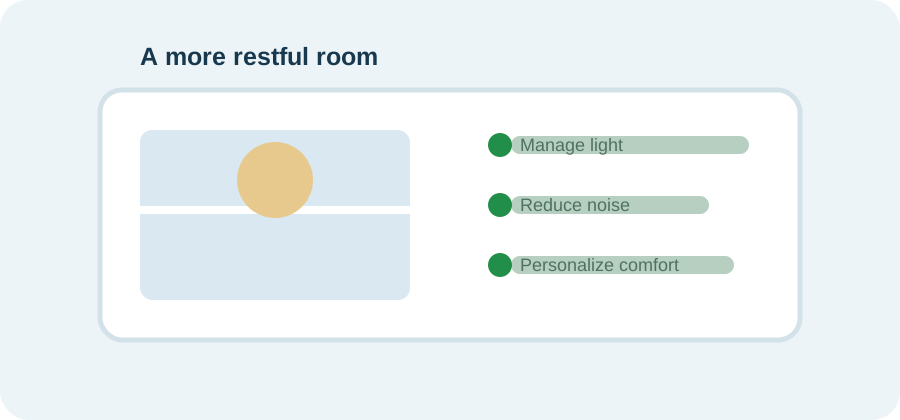
A bedroom checklist focused on light, noise and personal comfort.
Reduce the noise you can control
Silence avoidable alerts, close a door if that helps and consider whether earplugs or a steady background sound suit your situation. If you share a home, a small conversation about quiet hours may be more useful than buying new equipment.
For unavoidable noise, focus on realistic adjustments rather than expecting a perfectly silent room.
Make comfort personal
Comfort is individual. Adjust bedding, sleepwear and ventilation to what feels appropriate for you. Public sleep guidance often recommends a cool, comfortable room, but a specific temperature is not a universal rule.
Try one change at a time so you can tell whether it makes a difference.
Remove small sources of friction
Keep the bedside area simple. Put water, glasses, a book or other everyday essentials where they are easy to reach. Move work materials away from the bed if seeing them makes it harder to switch off.
You do not need an expensive makeover. A tidy surface, a dimmer light and a quieter phone can be enough to begin.
A 10-minute bedroom audit
Light: What is bright when you want the room dim?
Noise: What can you silence, close or move?
Comfort: What feels too hot, cold, rough or awkward?
Distractions: What reminds you of work or unfinished tasks?
If sleep remains difficult despite changes, or you are concerned about symptoms such as breathing interruptions or severe daytime sleepiness, seek advice from a healthcare professional.
Sources & further reading
The practical suggestions in this guide are informed by the public resources below. They are not a substitute for individual medical advice.
This article is general educational information, not medical advice. Persistent sleep difficulties, severe daytime sleepiness, breathing pauses during sleep or other concerning symptoms deserve discussion with a qualified healthcare professional.
Map the light sources
Stand in the bedroom during your normal sleeping hours and look for sources of light: windows, hallway gaps, indicator LEDs and screens. You may not notice how much light enters until the room is dark. Start with reversible fixes, such as turning electronics away or closing a door more fully. When choosing window coverings, consider fire safety, ventilation and whether the room becomes too hot.
Work on noise one source at a time
Try to distinguish intermittent noise from steady background sound. Door slams, notifications and appliance alerts may be easier to solve at their source than to mask with louder sound. Comfortable earplugs can be useful for some adults but may be inappropriate if you must hear a child, alarm or emergency signal. If you try a sound machine, keep the volume moderate and place it away from your ear.
Check temperature and bedding comfort
A room that feels warm during the day may feel different overnight. Notice whether heat, heavy blankets or damp air wake you, then make small changes such as lighter bedding or safe airflow. Do not assume that an expensive mattress is necessary. Check whether pillows support your preferred sleeping position and whether the bedding is easy to clean. Comfort is personal and cannot be reduced to a universal temperature or a single recommended purchase.
Create a reliable daytime setup
For daytime sleepers, practice closing the room before your planned sleep window: curtains, devices, door and any agreed household noise precautions. Prepare water and essential items beforehand so you do not need to search for them while tired. A low-effort reset after waking makes it easier to repeat the setup the following day. Persistent sleep disruption may have causes beyond the bedroom and should not be dismissed as a decoration problem.
Institutional reading
For further context, consult this public-health resource. It does not evaluate or endorse any product linked elsewhere on this page.