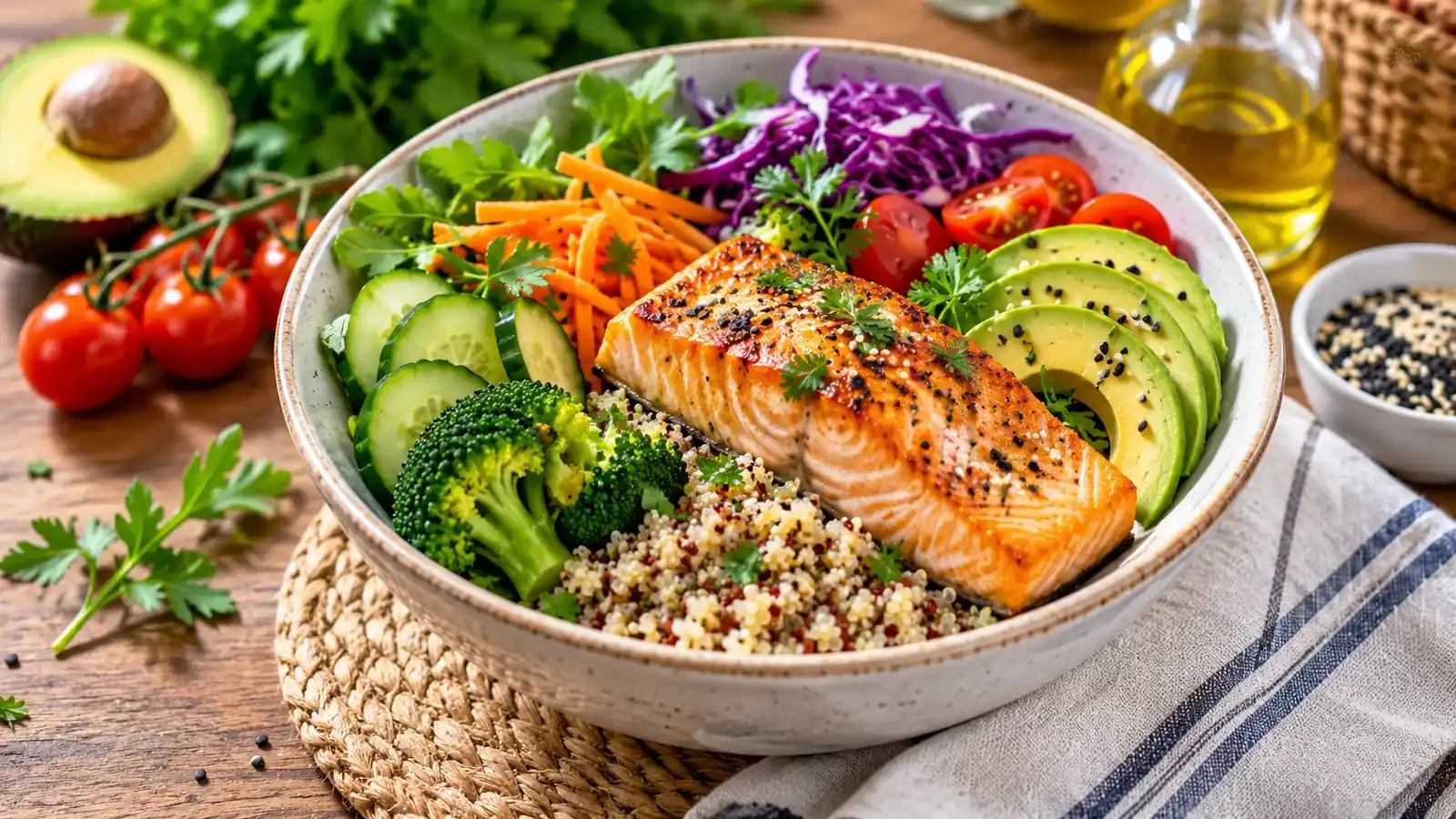
You do not need to prepare every meal for seven days. Start by identifying two busy days and one dish you can safely store or quickly assemble. Check your calendar, available containers and fridge space before buying ingredients. Preparing a few flexible components, such as grains, vegetables and a protein source, gives more combinations than cooking identical boxes for an entire week.
Build meals from practical components
A balanced plate can combine vegetables or fruit, a source of protein, high-fibre starches and fats appropriate to your needs. The exact proportions vary with appetite, culture, medical requirements and activity level. Frozen vegetables, canned beans and tinned fish can be convenient options. Choose ingredients you actually enjoy; a plan that ignores your preferences is unlikely to remain useful.
Protect food safety during preparation
Wash hands and utensils, keep raw and ready-to-eat items separate, and follow local guidance for refrigeration and reheating. Cool cooked food promptly and label containers with preparation dates. If you are unsure how long a dish can safely be stored, consult your national food-safety authority rather than relying on an internet rule of thumb. People at greater risk from foodborne illness may need stricter precautions.
Keep cost and waste visible
Compare the unit price of ingredients and use what is already in the kitchen before adding more. Choose recipes that share vegetables or pantry items without becoming repetitive. Freeze portions when appropriate, and plan one flexible meal for leftovers. A good meal-prep system should reduce decision fatigue, not demand special powders, branded containers or subscription services.
A practical way to apply this guide
For your own routine, consider this question about choose a manageable planning horizon: what is the smallest change you can try this week, and how will you know whether it fits your circumstances? You do not need to prepare every meal for seven days. Keep the experiment realistic and avoid turning advice into a strict rule.
For your own routine, consider this question about build meals from practical components: what is the smallest change you can try this week, and how will you know whether it fits your circumstances? A balanced plate can combine vegetables or fruit, a source of protein, high-fibre starches and fats appropriate to your needs. Keep the experiment realistic and avoid turning advice into a strict rule.
For your own routine, consider this question about protect food safety during preparation: what is the smallest change you can try this week, and how will you know whether it fits your circumstances? Wash hands and utensils, keep raw and ready-to-eat items separate, and follow local guidance for refrigeration and reheating. Keep the experiment realistic and avoid turning advice into a strict rule.
Institutional reading
For further context, consult this public-health resource. It does not evaluate or endorse any product linked elsewhere on this page.
Imagine that Wednesday and Thursday are your busiest days. You might cook a batch of grains, prepare washed vegetables and choose a protein that can be safely stored, then combine those components differently on each day. A second option could be a freezer-friendly meal for a time when cooking is unrealistic. Verify storage instructions for the ingredients you choose rather than assuming all foods keep for the same number of days. This approach keeps choice in the routine while reducing rushed decisions. If you need a therapeutic diet, a registered dietitian can help adapt the plan to medical needs.
A written shopping list can help avoid duplicate purchases. Check portions against the number of meals you will actually eat at home, and keep one flexible option for a schedule change.
MORE TO EXPLORE
Continue exploring
Practical, free guides you can read at your own pace.
Optional product research: The Oxidized Cholesterol Strategy
This optional paid guide discusses cholesterol; balanced meal preparation does not require a purchase or a particular programme. Read our independent assessment before deciding whether the offer is relevant to you.
Affiliate disclosure: our review contains seller links that may earn us a commission, at no additional cost to you.